Egyptian Loofah Farming In The Nile Delta – From Seed To Sponge
A step-by-step operational guide for wholesale buyers on container shipping, phytosanitary requirements, customs tariffs, and moisture control when buying loofah from Egypt.
Have you ever noticed how many spa brands and importers write “Egyptian” on their natural loofah orders? The reason starts in the fields of the Nile Delta, where growers have handed down Egyptian loofah farming from one generation to the next.
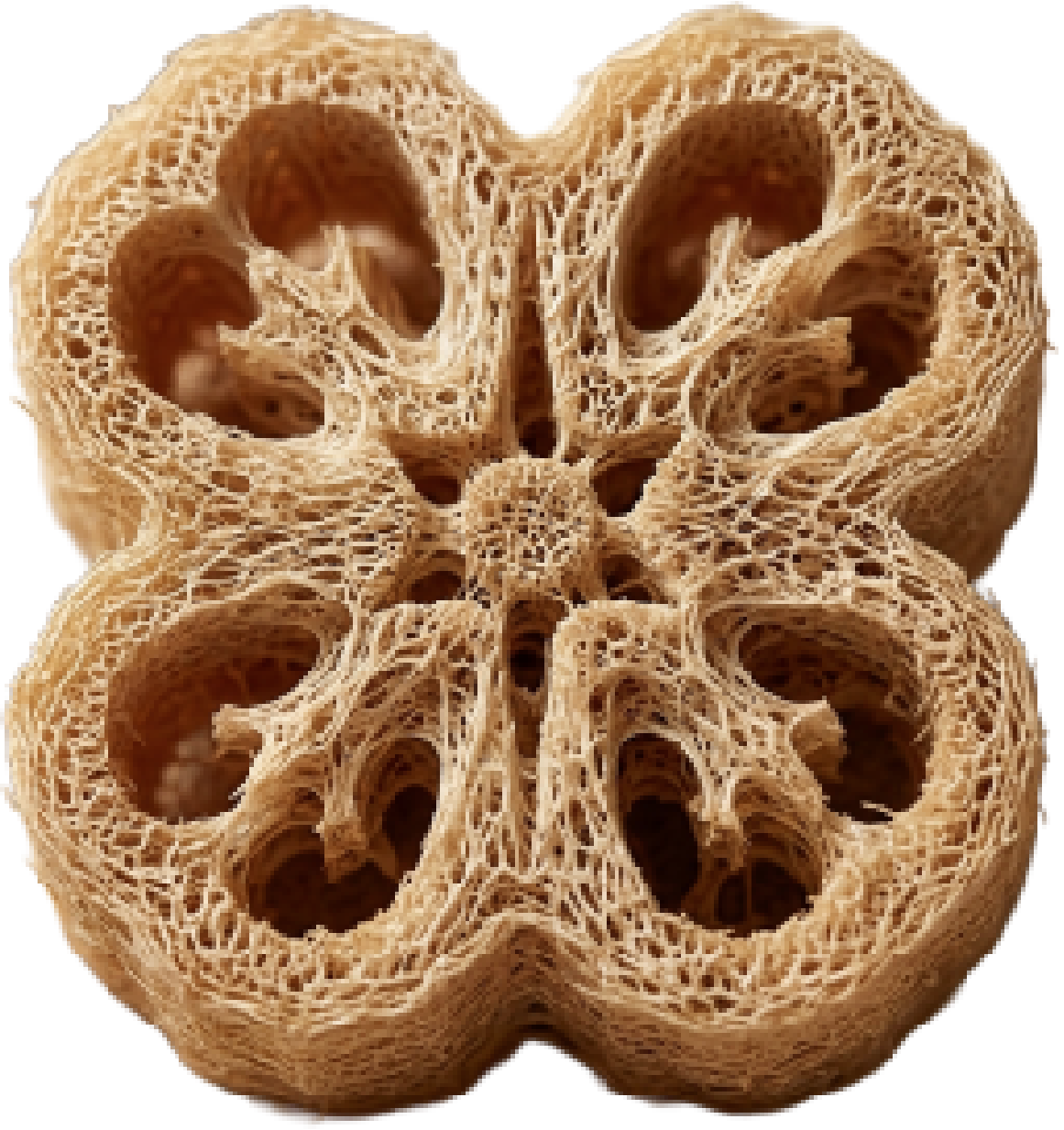
A loofah is not a sea sponge. It is the dried, fibrous skeleton of Luffa aegyptiaca, a climbing gourd in the cucumber family, and its botanical name points straight back to Egypt.
This guide explains how a loofah farm in Egypt runs. It covers the climate and soil the crop needs, planting and trellising, harvest timing, and the post-harvest steps that set fiber quality.
It also covers what buyers should check before choosing a supplier, based on the field-to-bale process we follow at Agro Village.
Take Away: What You’ll Learn
- Why the Nile Delta’s sun, soil, and water suit Luffa aegyptiaca
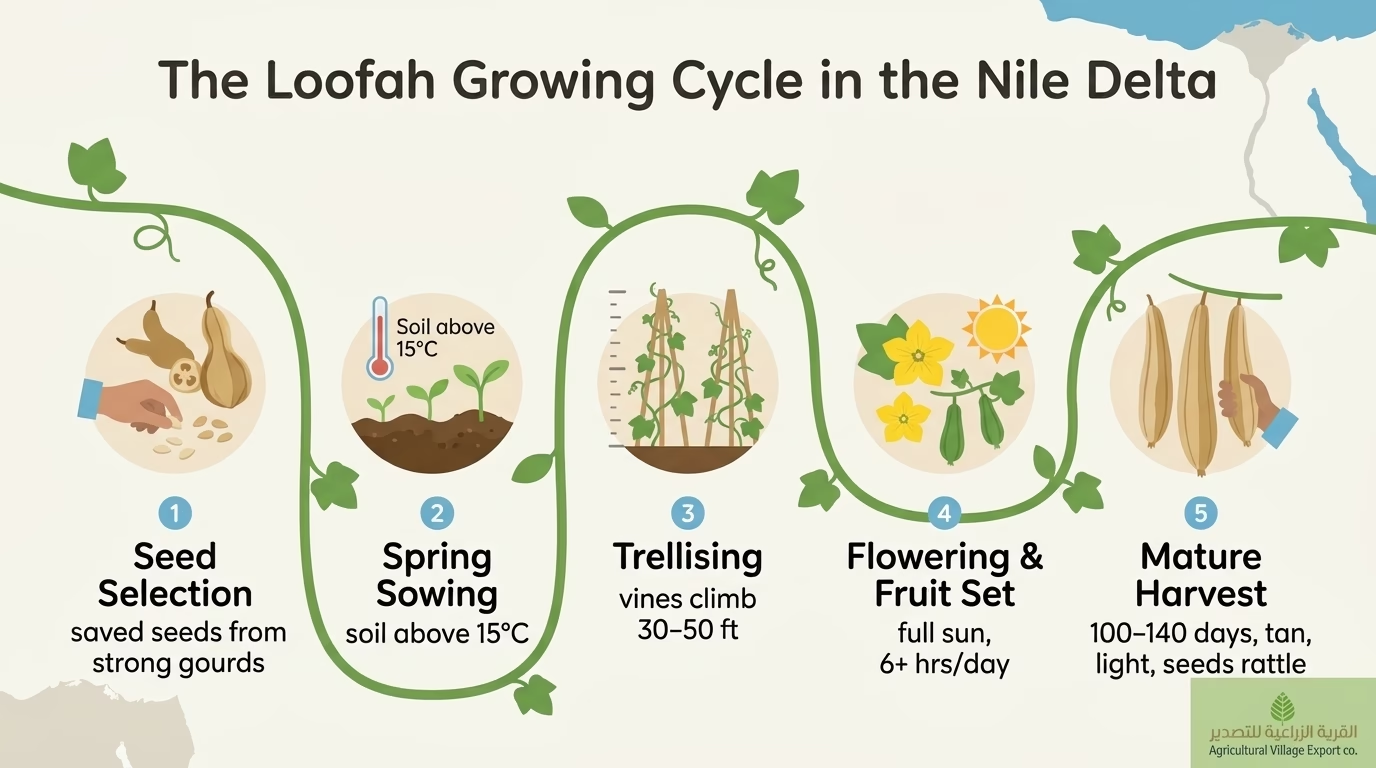
- The full growing cycle, from seed to a mature harvest of about 100 to 140 days
- How hand-picking and sun drying affect fiber density and color
- What separates export-grade loofah from low-grade fiber
- The key questions to ask a loofah farm in Egypt before you source
Egyptian Loofah Farming: How the Crop Grows in the Nile Delta
Loofah is an annual vine that needs heat, light, and steady moisture. The Nile Delta provides all three. Each stage below affects the sponge that eventually reaches a bathroom shelf or a factory floor.
Why the Nile Delta Suits Loofah
The Delta has a long, frost-free summer, strong sunshine, and rich alluvial soil watered by the Nile. NC State Extension notes that luffa needs at least four frost-free months and six or more hours of full sun a day.
Those conditions let the vines climb, flower, and fill out their fruit fully. That produces longer gourds with a denser, more even fiber network inside.
Choosing the Right Seeds and Soil
Good fiber starts with good seed. We start by selecting the finest loofah seeds and planting them in fertile Egyptian soil so that length and fiber density carry forward.
Luffa does best in well-drained, loamy soil with plenty of organic matter. Fields that waterlog can rot the roots, so the soil is prepared before sowing to drain freely.
Planting and Trellising
Growers sow in spring once the soil warms. Ontario’s agriculture ministry (OMAFRA) advises waiting until soil temperature reaches at least 15°C, with 25–35°C as the ideal range.
The vines can grow 30 to 50 feet long, so farmers train them on sturdy trellises. Keeping the fruit off the ground keeps it clean and straight and protects it from damage, all of which buyers notice in the finished sponge.
How Long Does Loofah Take to Mature?
Loofah grown for fiber needs about 100 to 140 days from planting to harvest. That is much longer than the 60 to 90 days for the edible young fruit.
The FAO’s Ecocrop database gives a similar figure of 100 to 120 days to mature fruit. Picking too early gives thin, weak fiber, so experienced farmers wait.
Hand-Picking at Peak Maturity
A mature gourd turns from green to tan, feels light, and its seeds rattle when shaken. These are signs that the inside has dried into firm fiber.
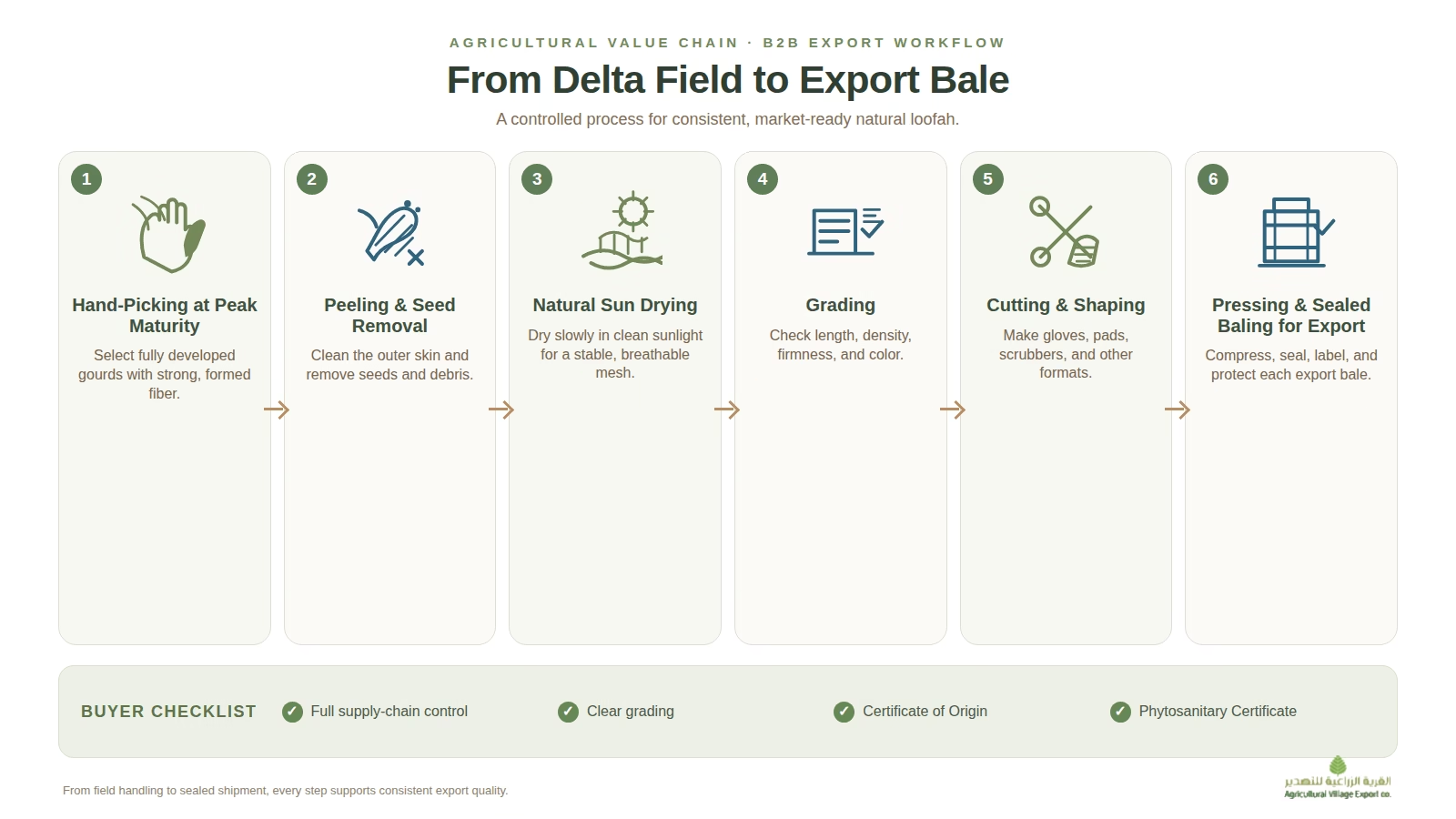
At Agro Village, each fruit is hand-picked at peak maturity rather than harvested in bulk. This keeps immature gourds out of the batch and keeps texture even. You can read about our team’s 20+ years in the Egyptian loofah market.
Loofah Farm Egypt: From Harvest to Export-Ready Fiber
Harvest is only the halfway point. The steps after it, from peeling through to pressing, decide whether a loofah becomes a premium export product or a low-grade one.
1. Peeling and Seed Removal
Workers remove the dry outer skin, then shake out the seeds and leftover pulp. Done carefully, this leaves a clean fiber skeleton with no torn sections.
Some markets prefer a lighter color, which bleaching can give. Many spa and eco-focused brands now choose natural, unbleached loofah for its authentic look.
2. Sun Drying
The peeled fiber dries in direct Egyptian sunlight until no moisture is left. This step matters a great deal, because damp fiber can grow mold in storage or in a shipping container.
The Delta’s dry, sunny days make this natural process reliable without industrial dryers. That is part of why Egyptian loofah is known for its clean, golden tone.
3. Grading Fiber Quality
After drying, the loofah is sorted by quality level, fiber length and density Dense, even fiber suits gloves and pads, while softer pieces work better for gentle body sponges.
Research in Sustainability (MDPI) reports that luffa fiber is mostly cellulose, with smaller shares of hemicellulose and lignin. That plant-based structure is what makes a natural loofah firm, absorbent, and biodegradable.
4. Cutting, Shaping, and Pressing into Bales
Graded fiber is either sold raw or cut and sewn into finished shapes. At Agro Village, these include gloves, back scrubbers, heart loofahs, and hotel minis. You can browse the full range of Egyptian loofah products.
Material for manufacturers is pressed to reduce volume without crushing the fiber, then sealed into tight bales. The raw loofah bales are packed this way to keep out moisture during long sea transit.
What Should Buyers Look for in a Loofah Farm in Egypt?
Look for a supplier that controls the whole chain, from contracted farms through drying, grading, and pressing. A supplier that only trades loose fiber has far less control over quality.
Ask about harvest maturity, drying methods, and grading standards. Also check export documents: a Commercial Invoice, a Certificate of Origin and a Phytosanitary Certificate should come as standard. Our export page lists what we provide with every shipment.
Source Natural Egyptian Loofah Directly From the Delta
Agro Village runs the full chain from seed to sealed bale. We work with contracted farmers in the Nile Delta and oversee drying, grading, and pressing ourselves. You get consistent fiber, batch after batch.
Our range covers raw material bales for manufacturers and finished products for retail, spa, and hotel brands. We also offer custom private-label production, so your brand can carry authentic Egyptian loofah.
Want to judge the quality yourself before you commit? Request free samples, check the texture and density first-hand, and let our team help you pick the right grade for your market.
Every shipment comes with full export documents, including a Certificate of Origin and a Phytosanitary Certificate. Our team handles both air and sea freight, so your order reaches you safely and on time.
Source Egyptian Loofah Direct from the Grower
Raw material bales and finished bath pieces, shipped FOB or CIF with full export documents. Bulk export orders by container, and a written quote within 24 hours and a written quote within 24 hours.
Get a Wholesale Quote Request a Free SampleConclusion
Egyptian loofah farming draws on the Nile Delta’s long, sunny season, fertile soil, and generations of grower know-how. Trellised vines and a full 100–140-day cycle produce long gourds with dense, even fiber.
The work after harvest matters just as much. Hand-picking at maturity, careful peeling, thorough sun drying, and strict grading turn a dried gourd into an export-grade natural sponge.
For buyers, choosing a loofah farm in Egypt means looking past the product to the process behind it. Full supply-chain control, clear grading, and proper export documents are what keep quality consistent from order to order.
Takeaway Message: Great loofah is grown, not just traded. If you source from a supplier that manages every step from Delta field to sealed bale, you get the consistency your brand depends on.
FAQs
Here are quick answers to the questions buyers and readers ask most about Egyptian loofah farming.
Is loofah a plant or a sea sponge?
Loofah is a plant. It is the dried fibrous interior of the Luffa gourd, a member of the cucumber family, and not a marine sponge. The fruit is left to mature and dry, then peeled to reveal the fiber skeleton.
Where is loofah grown in Egypt?
Most Egyptian loofah grows in the Nile Delta. Its warm, frost-free summers, strong sun, and Nile-irrigated alluvial soil suit the long growing cycle the crop needs to form dense fiber.
How long does it take to grow loofah for sponges?
Loofah grown for fiber usually needs about 100 to 140 days from planting to harvest. Harvesting before full maturity gives thin, weak fiber that is not suitable for export-grade products.
How do you know when a loofah is ready to harvest?
A ready gourd turns from green to tan or light brown, feels noticeably lighter, and its seeds rattle when shaken. These signs show the inside has dried into firm fiber.
Why is Egyptian loofah considered high quality?
The Nile Delta climate allows long, full growth, and natural sun drying keeps the fiber clean and mold-free. Generations of farming experience also lead to careful hand-picking and grading.
Is natural loofah biodegradable?
Yes. Natural loofah is a plant fiber made mostly of cellulose, hemicellulose, and lignin, so it breaks down naturally. That makes it a popular eco-friendly alternative to plastic bath sponges.