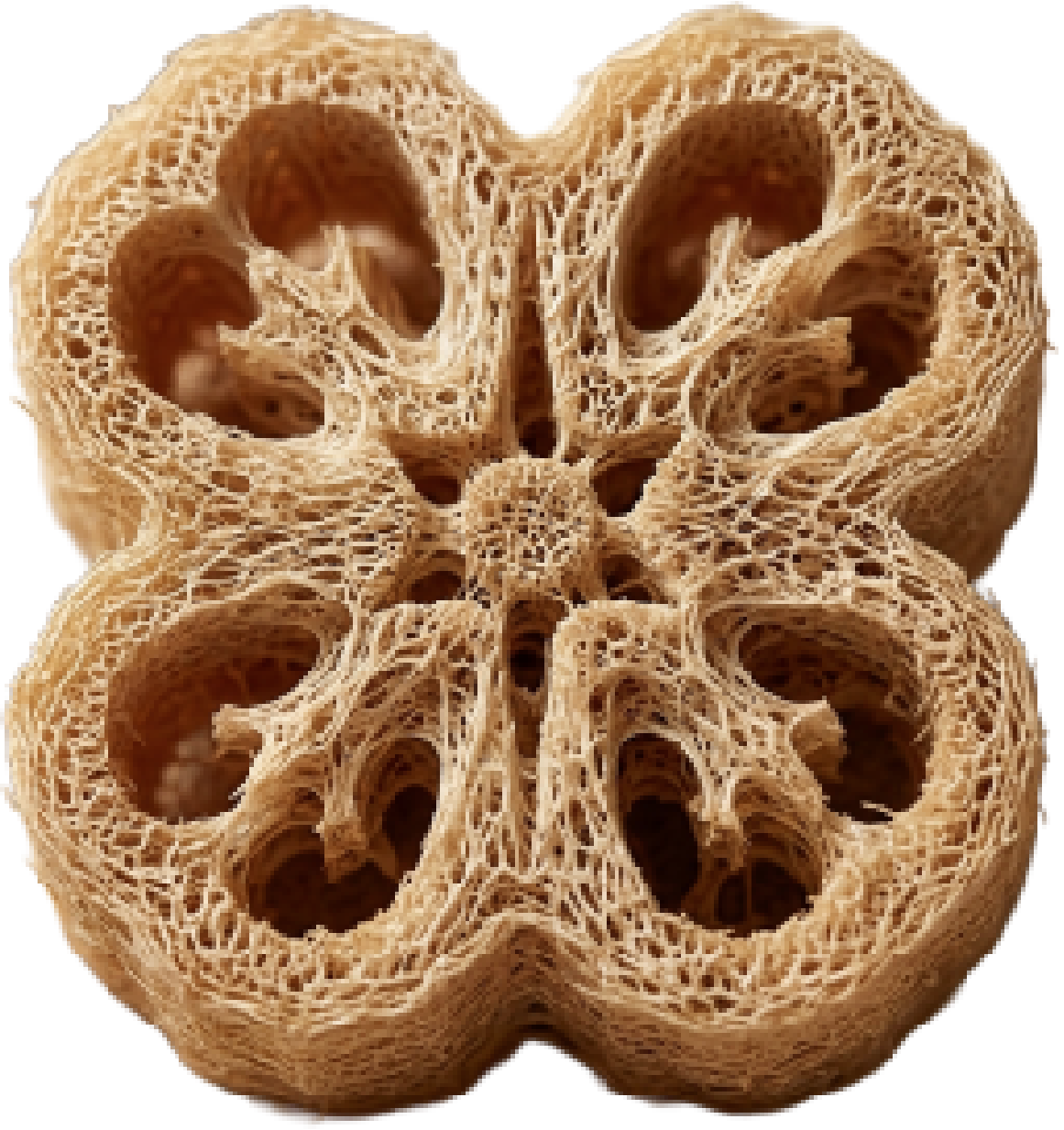
Egyptian Loofah vs. Other Origins – Strength, Density & Size
A step-by-step operational guide for wholesale buyers on container shipping, phytosanitary requirements, customs tariffs, and moisture control when buying loofah from Egypt.
Two loofah sponges can look alike on a shelf and still perform very differently after a month of use. One keeps its shape and texture. The other goes soft, flattens and starts to fall apart.
If you source natural sponges for a brand or a factory, you have probably compared Egyptian loofah vs other origins. Egypt has a long-standing reputation in the loofah trade, and buyers still ask for it by name, even though loofah is available from several countries.
This guide explains what makes the difference: growing conditions, maturity at harvest and handling after harvest. It also shows how to compare strength, density and size yourself using samples.
Key Takeaways
- Most bath loofah comes from one species, Luffa aegyptiaca, but growing conditions and handling shape the fiber it produces.
- Egypt’s long, warm season lets gourds mature fully on the vine, which builds thicker, denser fiber.
- Hand-picking at maturity and sun drying protect fiber strength and keep moisture out.
- Egyptian loofah grows larger and fuller, which gives more usable material and allows long formats.
- The best way to compare origins is to test samples side by side using the checklist in this guide.
Egyptian Loofah vs Other Origins: What Buyers Compare
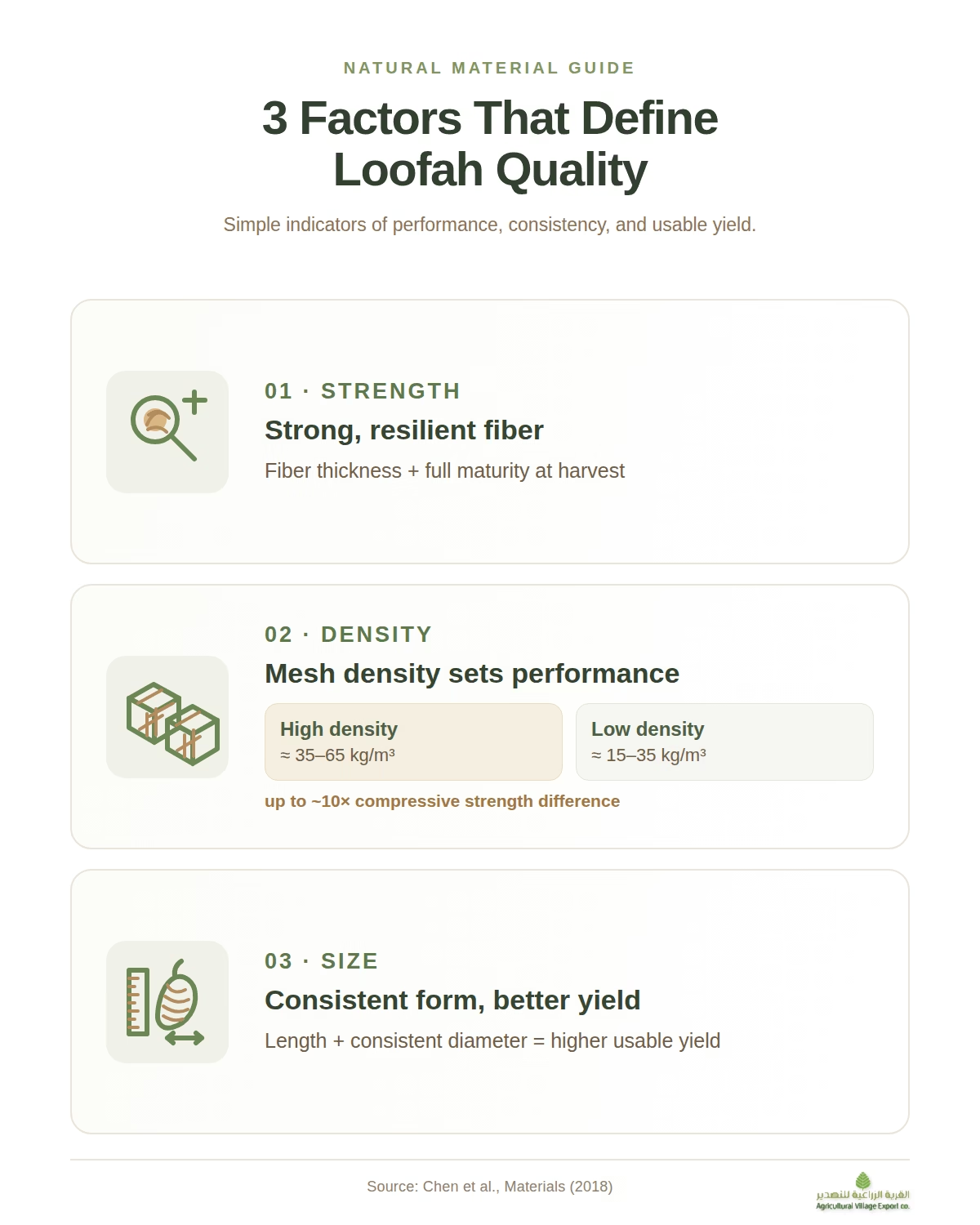
When buyers compare loofah from different countries, they look at three traits: strength, density and size. All three depend on how the fruit was grown, how mature it was at harvest and how it was dried and packed.
Why Growing Conditions Matter
Luffa needs a long, warm season to develop a fully mature fiber network. NC State Extension notes that the crop needs around 120 days to mature for sponge use.
Regions with a long, hot, dry season let fruits mature fully on the vine. Where the season is shorter, growers may need to harvest earlier. Egypt’s climate and the fertile soil of the Nile Delta give the gourd the time it needs, which is why Egyptian loofah is known for thick, full fiber. Learn more in [link: Egyptian Loofah Farming in the Nile Delta].
Strength: Fiber Thickness and Maturity
Strength comes mostly from how mature the fiber network is. NC State’s cucurbit breeding program notes that fruits whose fiber network has not fully developed will not dry into usable sponges.
A fully mature sponge with thick fiber walls holds up better to repeated wetting and squeezing. Egyptian loofah fibers are thicker and more resilient, so they keep their shape longer in use. At Agro Village, fruits are hand-picked at full maturity and then sun-dried to protect that strength. See [link: Hand-Harvested Egyptian Loofah: Why Timing Matters for Fiber Strength].
Density: The Trait That Predicts Performance
Density describes how tightly the fibers are packed. A 2018 study in Materials compared high-density luffa (about 35–65 kg/m³) with low-density luffa (about 15–35 kg/m³). The high-density samples had roughly ten times the compressive strength, while the low-density samples absorbed more water and recovered their shape less reliably after compression.
Egyptian loofah is known for a tight, robust fiber network that gives effective exfoliation without crumbling. The right density still depends on your product: firm exfoliating gloves need dense fiber, while gentler pads can use a softer network. The easiest way to judge density is hands-on, with samples.
Size: Length, Diameter and Usable Yield
Size affects yield. A longer, fuller gourd gives more usable cuts for gloves, pads and long formats. Size depends on the plant, the length of the growing season and steady water during growth.
Egyptian loofahs grow larger and fuller, which is what makes products such as an 11 x 90 cm full-body loofah possible. For manufacturers, consistent size also means less cutting waste. If you process the material yourself, compare full-length raw loofah bales before you commit.
Luffa Aegyptiaca: The Species Behind the Sponge
Luffa aegyptiaca is the accepted botanical name for the sponge gourd, and Luffa cylindrica is a synonym, according to Kew’s Plants of the World Online. The name points to the plant’s long history along the Nile.
The closely related Luffa acutangula, or ridged luffa, is grown mainly for its edible young fruit. Bath and scrubbing sponges come from Luffa aegyptiaca.
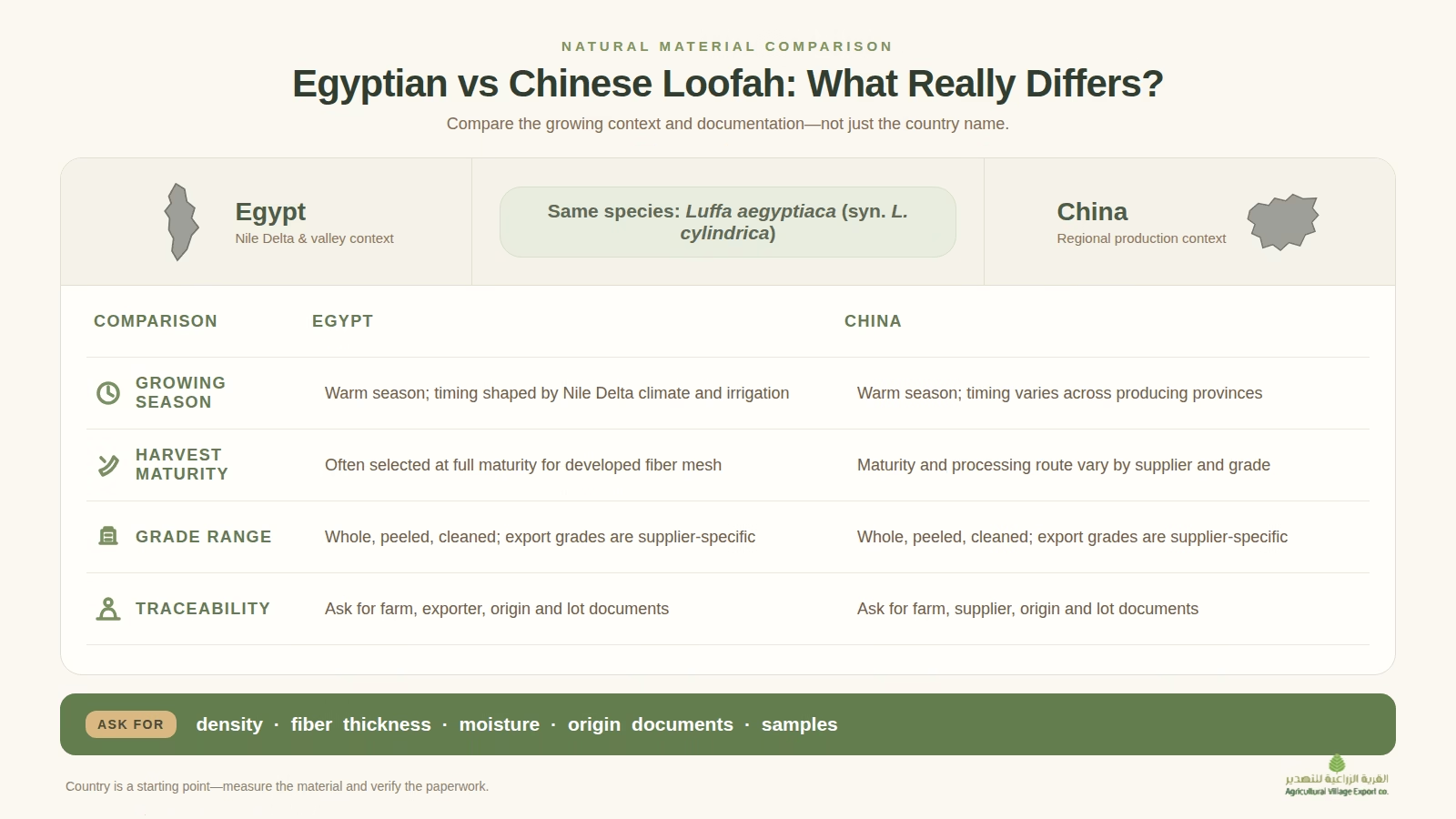
Because the species is the same in many countries, the differences buyers notice come from where and how it is grown and handled.
Egyptian Loofah vs Chinese Loofah
For many buyers, the practical comparison is Egyptian loofah vs Chinese loofah. Both are widely traded, and both come mainly from the same species. The differences come from growing conditions, harvest timing and processing.
Egyptian loofah benefits from a long, warm growing season in the Nile Delta, hand-picking at maturity and natural sun drying. These conditions produce the thick, dense, larger fiber that buyers associate with Egyptian origin.
Whichever origin you are considering, base your decision on what you can measure and feel: fiber thickness, density, size and consistency between shipments. Request samples, test them against your product needs and choose the material that performs best.
How to Compare Loofah Samples from Any Origin
A short hands-on test tells you more than any label. Use these checks on every sample and record the results side by side.
1. Check the fiber network
Hold the sponge up to the light. A dense, even network with few large gaps usually means mature fruit and better durability. Thin, papery fibers suggest early harvest.
Press the sponge firmly and let go. Good fiber springs back without cracking or shedding. Cut one sample in half and compare the core with the outer layer: a well-grown loofah is dense all the way through.
2. Check moisture and condition
A well sun-dried loofah feels light and dry and has no musty smell. Sun drying keeps moisture low to prevent mold, and tight, sealed bales block moisture during sea freight.
Natural color varies slightly from piece to piece. Look instead for dark spots, grey patches or mildew, which point to poor drying.
3. Check size and consistency
Compare length and diameter across several pieces. Consistent sizes make cutting easier and reduce waste in production.
4. Check the export documents
Every shipment should come with a Commercial Invoice, a Certificate of Origin and a Phytosanitary Certificate. Make sure they match the batch and product description you agreed on. Missing or vague documents are a warning sign for any origin.
Request Egyptian Loofah Samples and Compare Them Yourself
The best way to settle the Egyptian loofah vs. other origins question is to hold the samples in your hands. Put them next to your current material and compare fiber thickness, firmness, and size in your own tests.
Agro Village grows, hand-harvests, sun-dries,s and presses Luffa aegyptiaca in Egypt under one controlled process. You get raw bales, balls, gloves, and private-label formats from a single traceable source, which makes quality easier to keep consistent.
Whether you are a wholesaler, spa brand, nd or household-product manufacturer, start with a sample and judge the fiber yourself. Request your sample from Agro Village and see whether it fits your product line.
Source Egyptian Loofah Direct from the Grower
Raw material bales and finished bath pieces, shipped FOB or CIF with full export documents. Bulk export orders by container, and a written quote within 24 hours and a written quote within 24 hours.
Get a Wholesale Quote Request a Free SampleConclusion
Most loofah from any origin comes from the same plant, Luffa aegyptiaca. Strength, density, and size depend on climate, how mature the fruit is at harvest, and how carefully it is dried and pressed.
Research shows density can change compressive strength by about ten times. That makes density, not the country name, the most reliable number to compare. Egyptian vs Chinese loofah is therefore mainly a question of grading and consistency.
The main point: judge Egyptian loofah vs other origins with samples, density checks, and documentation. Egypt’s long growing season and mature-harvest practices give it a strong starting point, but your own tests should make the final decision.
FAQs
These are common questions buyers ask when comparing loofah origins and species.
Why is Egyptian loofah considered high quality?
Egypt’s long, warm growing season lets luffa fruits mature fully, which produces thicker and denser fibers. Many suppliers also hand-harvest and sun-dry the fruit. Confirm quality with samples, because no published study ranks origins directly.
Is Chinese loofah lower quality than Egyptian loofah?
Not necessarily. China supplies both low- and high-density grades of the same species. Quality depends on the grade and the supplier, so compare density and fiber thickness rather than the country.
What is the difference between loofah and luffa?
They are two spellings of the same thing. “Luffa” usually refers to the plant and its genus. “Loofah” is the common name for the dried fibrous sponge.
How long does a natural loofah sponge last?
A dense, fully mature loofah used for bathing typically lasts a few weeks. Let it dry fully between uses and replace it if it smells musty or the fibers start breaking down.
Which loofah density is best for exfoliating products?
Higher-density loofah, with thick, tightly packed fibers, suits firm exfoliating gloves and pads. Lower-density material is softer, absorbs more water, and suits gentler bath products.